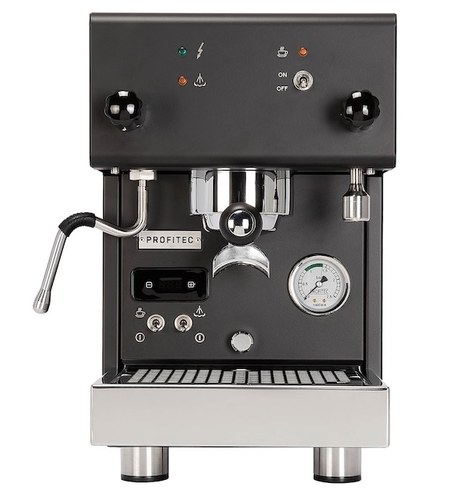
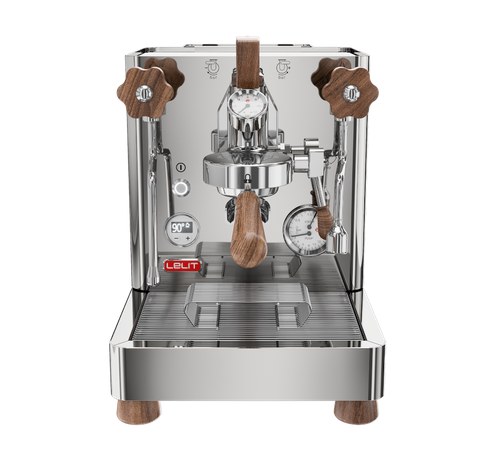
Both are dual boiler machines with an E61 group. The Bianca adds a manual flow paddle, dual PID control, and noticeably bigger boilers. The Pro 300 keeps things simpler and costs meaningfully less.
| Spec | Profitec Pro 300 | Lelit Bianca |
|---|---|---|
| Boiler | Dual, 0.4 L brew boiler plus a separate steam boiler | Dual, 0.8 L brew boiler plus a 1.5 L steam boiler |
| Group head | Standard E61 | E61, modified with a manual flow paddle |
| Flow profiling | Not available | Yes, group-mounted paddle for real-time control |
| PID control | Single | Dual, separate brew and steam temperature control |
| Heat-up time | About 15 to 30 minutes | About 15 to 30 minutes |
| Steam wand | Standard | 4-tip, no-burn |
| Pre-infusion | Fixed, mechanical | Programmable low-flow mode |
| Construction | Stainless steel | Stainless steel, with wood accents on some editions |
| Typical price | Lower of the two | Notably higher |
Flow profiling lets you manually adjust water flow and pressure during a shot rather than letting the pump run at a fixed rate. The Lelit Bianca's group-mounted paddle is built specifically for this. The Profitec Pro 300 doesn't have flow control; it runs a standard E61 group without that manual adjustment.
The Bianca's flow paddle, dual PID control, and larger boilers (0.8L brew and 1.5L steam versus the Pro 300's 0.4L brew boiler) all add cost. Whether that's worth it depends entirely on whether you want to actively shape shots by hand or would rather set it and let the machine run consistently.
Yes. The Pro 300 uses a standard E61 group, while the Bianca uses an E61 group modified with a paddle for flow control. One comparison database listed the Pro 300 as using a different group type, but that conflicts with how the machine is consistently described elsewhere, including by enthusiasts who own one, so we're treating the standard E61 description as correct.
This comes up in enthusiast discussions as a reasonable question, since the paddle is a mechanically more complex system than a standard E61 lever, but we didn't find solid data confirming a real reliability gap either way. Treat it as a discussion point worth being aware of, not a settled fact.
 Brew the Bean